This page provides information about postgraduate admissions, undergraduate summer placements and work experience.
Applications must be made online via the Postgraduate Prospectus. You are strongly encouraged to contact our staff members to discuss potential projects before making your application. Answers to frequently asked questions about study here and the application process can be found via the links on the right of this page.
Interested in a PhD in Astrophysics for October 2013 entry?
*April 2013 Update* we have filled our STFC funded places for October 2013 entry, however if you have another source of funding or are self-funded please contact us as we can still consider you.
The Astrophysics Open Day was held on 16th January 2013 from 3.30 - 5.30 in Blackett 1004.
The College and Department of Physics Open Day was held on Wednesday 5th December 2012.
Most of our PhD applications are for STFC funded places, so we set up formal deadlines for applications and dates for interviews. The application deadline for STFC funded places is 15th February 2013 - please note that there are severe delays within Registry, please send a copy of your application directly to us via astro@ null imperial.ac.uk. Interviews will be held on 6th and 7th March 2013 with offers made shortly after, (if you know that you will have difficulty with these interview dates please let us know as soon as possible).
If you are an overseas candidate who would need funding please contact us asap as many deadlines for funding are early.
A PhD normally takes 3.5 years to complete. We accept around 2-3 PhD students each year, mainly funded by STFC. Please see the STFC website to check your eligibility for these.
If you are not eligible for STFC funding, there are some scholarships available for UK, EU and overseas students through Imperial College. Applications for these are made in the same way via the Postgraduate Prospectus; please check the scholarships page for deadlines.
New Imperial College PhD Scholarship Scheme: provides 20k per year for up to 3.5 years to support a PhD place. All are elligible to apply, but we especially encourage students from outside the UK to apply for these scholarships since they are not ellibible for full STFC funding. More details here.
Applicants from the US may be eligible for Fullbright awards which have an early deadline of 17th October and thus should contact us as soon as possible.
Applicants who are resident in India and who have their first degree from an Indian institution may be eligible for the Inlaks Shivdasani Foundation.
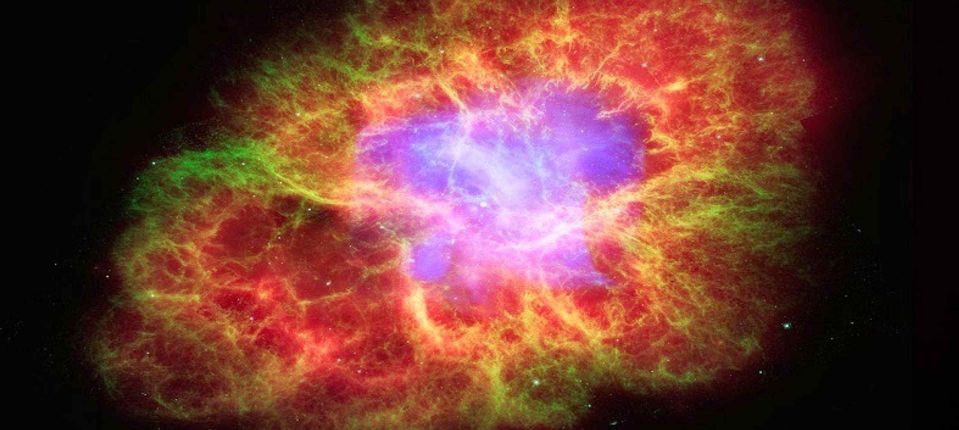
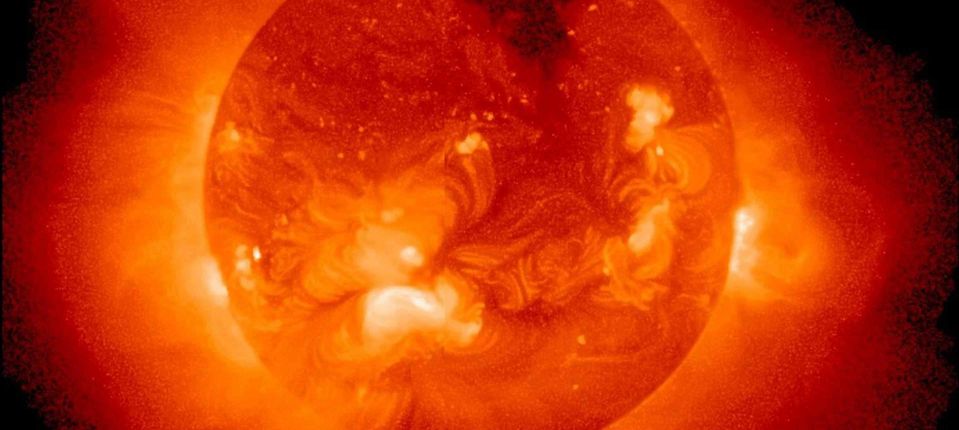
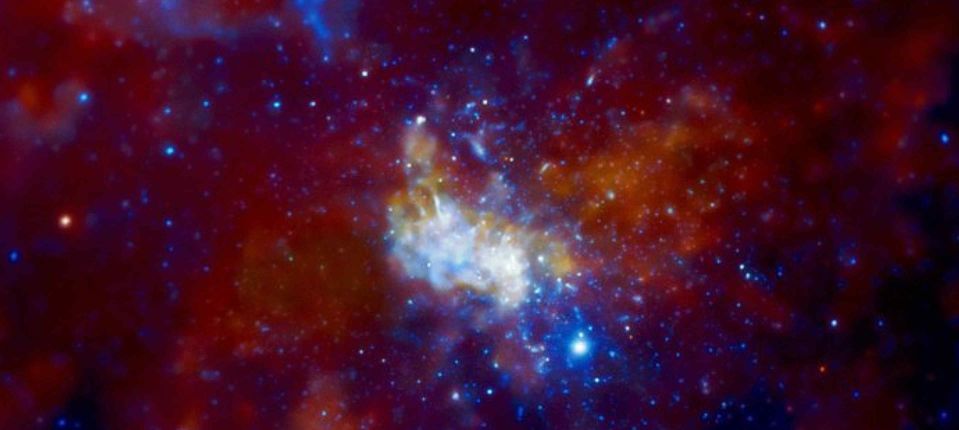
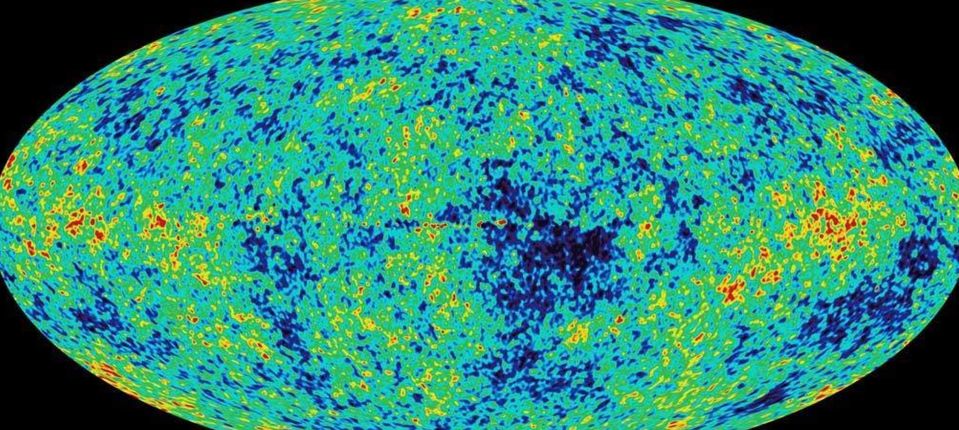
Astrophysicists at Imperial College London are engaged in research involving everything from our own sun to the most distant galaxies and the primordial Cosmic Background Radiation left over from the Big Bang. Our work uses some of the most powerful and sensitive astronomical instruments ever built, including several of the largest telescopes on Earth, and the Hubble, Herschel and Chandra Space Telescopes.
Elsewhere on this site you will find details of the main areas of research that we cover. These are: cosmology, formation and evolution of galaxies, and stellar and planetary astrophysics. We also have major expertise in the application of statistics to a wide range of astrophysical problems through our Astrostats Centre. The major projects within the group include AEGIS, EGAPS, Herschel, Planck UKIDSS and Euclid. There are staff members named under each topic and you are welcome to contact them to discuss possible projects.
A list of projects available for entry in 2013 can be found in the links on the right.
Opportunities are available for summer internships in the astrophysics group. We are only able to accept interns whose stay with us is properly funded. Several schemes are available for this, the most obvious one being the College Undergraduate Research Opportunities scheme, details of which can be found on the College UROP pages. The deadline for applying for UROP funding is expected to be 18th March 2013. UROP proposals must be filled out by both the intern and the prospective supervisor, so you will need to contact any potential supervisors well in advance of the 18th March deadline.
If you have funding from another source and are interested in an internship, or for more information on placements, please contact Dr David Clements. If there is a particular project and supervisor you have in mind, you can discuss possibilities directly with them. However, the 18th March UROP deadline also applies to all other potential internship placements. Applications that arrive after this date cannot be considered.
You may also find the Department's UROP webpage helpful which provides information projects across the research groups - http://www3.imperial.ac.uk/physics/studentinfo/urop.
The Physics Department's outreach team run a work experience programme for school students, further details and an online application form are available on their website -http://www3.imperial.ac.uk/physics/about/outreach/workexperience. The closing date for summer 2013 was January 15th. As the Astrophysics Group particpates in this successful programme we do not offer or accept work experience placements directly. Any queries about work experience should be directed to the Department's School Liaison Officer, Dr Mark Richards (mark.richards@ null imperial.ac.uk).